Welcome to the English-Basque online translator—your reliable tool for instant and high-quality translation powered by ArabicLib. This platform caters to both language learners and professionals who need accurate translations, comprehensive dictionaries, pronunciation aids, and engaging learning tools. Whether you need to translate documents, understand HTML context, or simply explore language differences, ArabicLib is your all-in-one solution.
English (a Germanic Indo-European language) and Basque (an isolate with no known relatives) are remarkably distinct. English is globally widespread and features analytic grammar, while Basque is native to the Basque Country and is known for its agglutinative structure and unique vocabulary.
The ArabicLib platform features an extensive English-Basque dictionary containing hundreds of thousands of translations. You'll find definitions, pronunciation guides, example sentences, and synonyms for every entry. This resource is invaluable for both beginners and advanced learners seeking precise language understanding.
Enhance your language skills with our easy-to-use tests and flashcards in all language pairs. Choose the correct translation, build vocabulary, and evaluate your progress through fun, engaging exercises designed for all proficiency levels.
ArabicLib provides accessible phrasebooks and essential vocabulary sections for English, Basque, and other languages. Explore basic words, common expressions, and daily-use sentences to boost your communication skills effortlessly, whether you’re traveling or starting to learn a new language.
Experience the ultimate translation, learning, and reference platform. Seamlessly bridge the gap between English and Basque, enjoy instant results, and unlock access to a world of multilingual resources through ArabicLib!
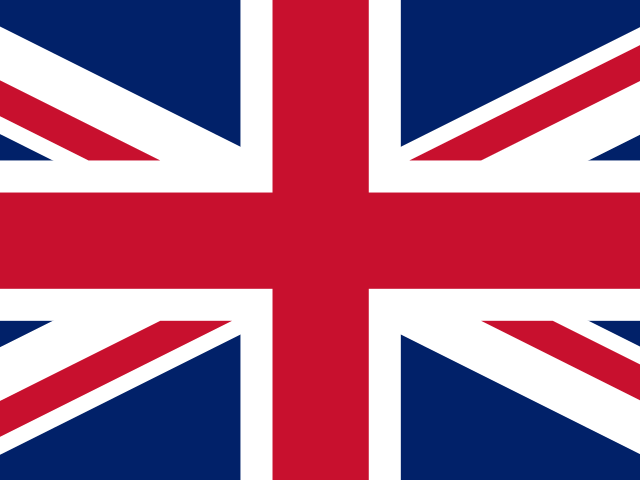
English is a fascinating language that is spoken by millions of people around the world. It is a West Germanic language that has its roots in the Anglo-Saxon kingdoms of England, and it has grown and evolved over the centuries to become one of the most widely spoken languages on the planet.
One of the unique things about English is that it has borrowed words from so many other languages, making it a truly global language. For example, many words in English have Latin or Greek roots, due to the influence of those languages on English-speaking cultures. Additionally, many English words have been borrowed from French, thanks to the influence of the Norman Conquest on England in 1066. In more recent times, English has borrowed words from languages such as Hindi, Mandarin, and Arabic, reflecting the increasing global influence of those languages and cultures.
English also has a rich literary tradition, with some of the greatest writers in history having written in the language. From Shakespeare to Jane Austen, from Charles Dickens to Ernest Hemingway, English has produced countless literary masterpieces that have captivated readers for centuries. And with the continued evolution of the language, new writers are constantly emerging to add their voices to this literary canon.
One of the interesting things about English is that it is a constantly evolving language. New words are added to the dictionary every year, reflecting changes in society and culture. For example, words such as "selfie" and "emoji" have become part of the language in recent years, reflecting the increasing importance of technology and social media in our lives.
Despite the challenges of mastering English as a second language, many people around the world are drawn to it because of its global reach and cultural significance. Learning English can open up new opportunities for travel, education, and career advancement, and can help individuals connect with people from different cultures and backgrounds.
Overall, English is a rich and diverse language that continues to evolve and grow with each passing year. From its complex grammar rules to its vast vocabulary, there is always something new to discover and explore about this fascinating language.
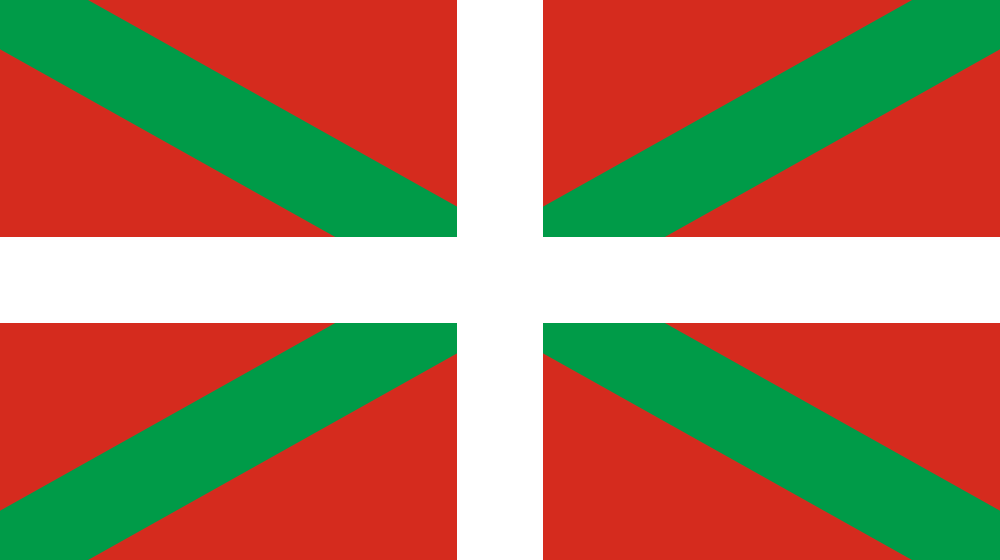
Basque, also known as Euskara, is a fascinating language that is spoken by over 1 million people in Spain and France. It is one of the few truly indigenous languages of Europe and has no known linguistic relatives.
One of the most interesting things about Basque is its unique grammar and syntax. Basque is an agglutinative language, which means that words are formed by combining smaller units of meaning called morphemes. Additionally, Basque has a complex case system, with six different cases for nouns and pronouns.
Today, Basque is an important language for business, science, and technology in the Basque region of Spain and France. Additionally, it is an essential tool for those interested in exploring Basque culture and engaging in international business and diplomacy.
Despite its significance in the Basque region, Basque has many different dialects and variations, with each area having its own unique version of the language. Some of the most widely spoken dialects include Gipuzkoan Basque, Biscayan Basque, and Navarrese Basque.
Learning Basque can be a challenging but rewarding experience. Basque grammar rules can be complex, and mastering pronunciation can be difficult. However, with practice and dedication, anyone can become fluent in the language and enjoy all the benefits it has to offer.
Lastly, Basque has become an essential tool for those interested in exploring Basque culture and engaging in international business and diplomacy. Mastery of the language can open up many opportunities for personal and professional growth, allowing individuals to connect with people from all over the Basque region and gain a deeper understanding of diverse cultures.
In conclusion, Basque is a fascinating and unique language that deserves to be studied and appreciated. Its unique history, cultural significance, and global importance make it an endlessly interesting language to learn and master. Learning Basque is a valuable skill that can open up many opportunities for personal and professional growth, as well as provide a gateway to understanding the diverse cultural traditions of the Basque region.
| Are you leaving today? | Gaur joango zara? |
| Who wants to say something? | Nork esan nahi du zerbait? |
| You have three dictionaries. | Hiru hiztegi dituzu. |
| My grandmother has a twin brother. | Nire amonak anaia biki bat du. |
| I just want you to be happy. | Zoriontsu izatea besterik ez dut nahi. |
| I will never forgive him. | Ez diot inoiz barkatuko. |
| Tom got a call from the hospital. | Tomek ospitaletik dei bat jaso zuen. |
| Beer is frothing in a glass. | Garagardoa edalontzi batean aparra egiten ari da. |
| This play consists of three acts. | Antzezlan honek hiru ekitaldiz osatuta dago. |
| He turned down my offer. | Nire eskaintzari uko egin zidan. |
| We see him every day. | Egunero ikusten dugu. |
| Is it a bus or a car? | Autobusa ala autoa da? |
| They have won many competitions. | Lehiaketa asko irabazi dituzte. |
| They eat meat once a week. | Astean behin jaten dute haragia. |
| Crap! I forgot my wallet! | Kaka! Nire zorroa ahaztu zait! |
| Happiness knew no bounds. | Zorionak ez zuen mugarik. |
| Tom left a note. | Tomek ohar bat utzi zuen. |
| What is this abbreviation? | Zein da laburdura hau? |
| I must come closer. | Hurbildu behar dut. |
| Now you are safe. | Orain seguru zaude. |
| Please come in! | Sartu mesedez! |
| I have a lot of photos. | Argazki asko ditut. |
| Tom spent three years in prison. | Tomek hiru urte eman zituen kartzelan. |
| My brother found a solution. | Nire anaiak irtenbide bat aurkitu zuen. |
| What are we going to do today? | Zer egingo dugu gaur? |
| Lemon tea, please. | Limoi tea, mesedez. |
| He refused to do so. | Uko egin zion horri. |
| What time does the concert start? | Zein ordutan hasten da kontzertua? |
| Blue roses are very beautiful. | Arrosa urdinak oso politak dira. |
| Never give up. Never give in. | Inoiz ez amore eman. Inoiz ez amore eman. |