Discover the advanced capabilities of ArabicLib – your comprehensive English-Arabic online translator and linguistic platform. Whether you are translating simple phrases, HTML-embedded texts, or exploring the nuances of English and Arabic, ArabicLib is designed to elevate your language experience with unparalleled precision and convenience.
English and Arabic represent two of the world’s most widely spoken, yet fundamentally different languages. English belongs to the Germanic branch of the Indo-European family, while Arabic is the most prominent Semitic language. Let’s explore their similarities, differences, and unique translation features:
In addition to fast and accurate English-Arabic translation, ArabicLib offers a robust English-Arabic dictionary featuring hundreds of thousands of translations, detailed definitions, audio pronunciation, contextual sentence examples, synonyms, and more. Maximize your vocabulary acquisition using interactive flashcards, quizzes, and “choose the correct translation” exercises for all supported languages.
Learners, travelers, and professionals can access a practical Phrasebook section and a Lexicon with essential words and expressions in diverse topics. Whether you are a beginner or an advanced speaker, ArabicLib is the perfect companion to master English, Arabic, and over 100 other languages.

English is one of the most widely spoken languages in the world, with over 1.5 billion people speaking it as either a first or second language. It is the official language of over 50 countries, including the United States, Canada, Australia, and the United Kingdom.
The history of the English language can be traced back to the 5th century, when Germanic tribes such as the Angles, Saxons, and Jutes migrated to England from what is now modern-day Germany and Denmark. These tribes brought with them a language that would eventually evolve into what we know as Old English. Over the centuries, Old English would go through many changes, with the influence of Latin, French, and Norse resulting in Middle English and eventually Modern English.
English has a complex grammar system with a variety of tenses, modes, and forms. It is also known for its large vocabulary, which includes words borrowed from many different languages. English is used in a wide range of settings, from everyday conversations to business meetings, scientific research, and literature. It is the language of Shakespeare, Jane Austen, Ernest Hemingway, and many other great writers.
In recent years, the influence of English has continued to grow as a result of globalization and the widespread use of the internet. English is often used as a common language for international communication, making it an essential skill for anyone looking to work or study in a global context.
Despite its global reach, English is constantly evolving and changing. New words are added to the language each year, and the way in which people use and understand English varies across different regions and cultures. As such, the study of English is a fascinating and never-ending journey, offering a window into the history, culture, and diversity of the world.
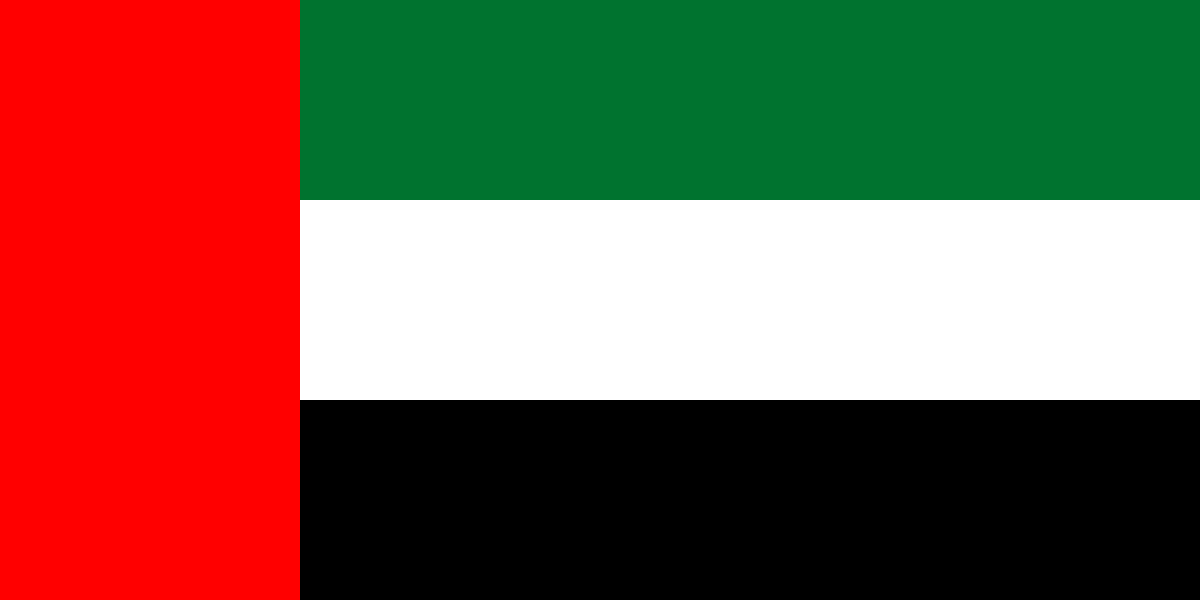
Arabic is a fascinating and highly complex language spoken by more than 400 million people worldwide. It is the fifth most widely spoken language in the world and is the official language of over 20 countries.
One of the most interesting things about Arabic is its history. It evolved from the Old Arabic language, which was used for religious purposes in pre-Islamic Arabia. Over time, it developed into a distinct language with its own unique vocabulary and grammar.
Arabic has many dialects, each with its own unique features and variations. Some of the most widely spoken dialects include Egyptian, Levantine, and Gulf Arabic. Despite these differences, all varieties of Arabic share a standard written form known as Modern Standard Arabic (MSA). MSA is used in formal settings such as news broadcasts, government documents, and literature.
Additionally, Arabic has a unique and expressive vocabulary that reflects the culture and history of the region. It has borrowed words from many other languages, including Persian, Turkish, French, and English. This blend of words and phrases has created a rich and varied lexicon that is capable of expressing complex ideas and emotions.
Another fascinating aspect of Arabic is its calligraphy, which is considered an art form in many Arab countries. Calligraphy is the art of writing beautifully, and Arabic calligraphy has a long and rich history. Many mosques, palaces, and public buildings are adorned with beautiful calligraphic designs.
Despite its complexity, learning Arabic is a rewarding experience. It allows one to connect with the rich cultural traditions of the Arab world, which is known for its stunning architecture, delicious cuisine, and vibrant music scene. Additionally, Arabic can be an important tool for communication in the Middle East and North Africa, where it is spoken by many people across different ethnicities and religions.
In conclusion, Arabic is a unique and endlessly fascinating language that deserves to be studied and appreciated. Its rich history, diverse dialects, and expressive vocabulary make it an endlessly interesting language to learn and master. Whether for personal or professional growth, learning Arabic is a valuable skill that can open up many opportunities in the modern world.
| I wanted to save Tom. | أردت أن أنقذ توم. |
| Why are you doing this? | لماذا تفعل هذا؟ |
| I like this one even more. | أنا أحب هذا أكثر. |
| Is my answer correct? | هل جوابي صحيح؟ |
| Will you call me a taxi? | هل تدعوني بسيارة أجرة؟ |
| Call me at six thirty, please. | اتصل بي في السادسة والنصف من فضلك. |
| She may have met him yesterday. | ربما قابلته أمس. |
| What city do you live in? | في اي مدينه تعيش؟ |
| I support this proposal. | أنا أؤيد هذا الاقتراح. |
| He is the only one of his kind. | هو الوحيد من نوعه. |
| This job bores me to death. | هذه الوظيفة تضجرني حتى الموت. |
| I have to finish this work first. | يجب أن أنهي هذا العمل أولاً. |
| When does the plane leave? | متى تغادر الطائرة؟ |
| I have never seen her in jeans. | لم أرها قط مرتدية الجينز. |
| Please ask him to call me. | من فضلك اطلب منه الاتصال بي. |
| Did you pay for the book? | هل دفعت ثمن الكتاب؟ |
| How many books he has! | كم عدد الكتب لديه! |
| You will meet many difficulties. | سوف تواجه العديد من الصعوبات. |
| My father-in-law is an engineer. | والد زوجتي مهندس. |
| I poured water into a vase. | صببت الماء في إناء. |
| Tom used a floor jack. | استخدم توم الرافعة الأرضية. |
| He jumped into her car. | قفز إلى سيارتها. |
| Bill wins, right? | بيل يفوز ، أليس كذلك؟ |
| You hurt me. | آذيتني. |
| Do you know how to cook lobster? | هل تعرف كيف تطبخ الكركند؟ |
| I am exercising my rights. | أنا أمارس حقوقي. |
| Will you stay a little longer? | هل ستبقى لفترة أطول قليلا؟ |
| You must trust me. | يجب أن تثق بي. |
| Man cannot escape death. | لا يستطيع الإنسان الهروب من الموت. |
| He is always looking for pleasure. | هو دائما يبحث عن المتعة. |