ArabicLib is a modern English-Persian online translator designed for fast, accurate, and user-friendly translations. Not limited to English and Persian, ArabicLib supports over 100 languages and thousands of translation combinations, making it your one-stop solution for multilingual needs. Its unique dual-window interface enables you to translate text directly, including in HTML context, regardless of complexity.
English, a Germanic language, and Persian (Farsi), an Indo-Iranian language, differ considerably in script, structure, and phonology. English uses the Latin alphabet, is case-sensitive, and is written left to right. Persian uses a modified Arabic script, is written right to left, and omits vowels in writing, creating unique translation challenges. Grammatically, English is analytic with fixed word order, whereas Persian is more synthetic and flexible, often omitting the subject or even the verb if the context is understood.
Persian features no grammatical gender, simpler pluralization rules, and more consistent verb forms compared to English, which employs complex tenses and irregular verbs. Translation between English and Persian requires careful consideration of idiomatic expressions and both languages’ cultural contexts.
Beyond direct translation, ArabicLib offers an extensive English-Persian dictionary featuring hundreds of thousands of entries. Each word comes with clear definitions, example sentences, usage notes, synonyms, and native-quality pronunciations to ensure complete understanding and correct usage in context.
ArabicLib combines robust translation tools, a powerful dictionary, and language learning features under one user-friendly interface. Whether traveling, studying, or working with English, Persian, or any of the 100+ languages available, ArabicLib empowers you to communicate and learn with confidence.

English is a fascinating language that has evolved over time and has been influenced by various cultures and civilizations. It is one of the most widely spoken languages in the world, with over 1.5 billion people speaking it either as their first or second language. English is an official language in over 50 countries, making it a truly global language.
One of the reasons why English is so popular is its versatility. It can be used in a variety of contexts, including business, education, entertainment, and travel. It is also the language of international diplomacy and is used in many international organizations such as the United Nations, NATO, and the World Health Organization.
Another interesting aspect of English is its vocabulary, which is one of the largest of any language. It contains words from many other languages, including Latin, French, and Greek. This makes it possible to express concepts and ideas in a very precise and nuanced way. At the same time, English has also adopted many slang and colloquial expressions, making it a dynamic and ever-evolving language.
English is also the language of some of the world's greatest literature, including the works of William Shakespeare, Jane Austen, and Charles Dickens. These works have been translated into many other languages and have had a profound impact on the development of world literature.
Learning English is an important skill in today's globalized world. It opens up opportunities for travel, work, and study in English-speaking countries. It also allows people to communicate with others from different cultures and backgrounds, fostering understanding and cooperation.
In conclusion, English is a language that has had a profound impact on the world and continues to be a dynamic and important language in the 21st century. Its versatility, rich vocabulary, and cultural significance make it a fascinating language to learn and explore.
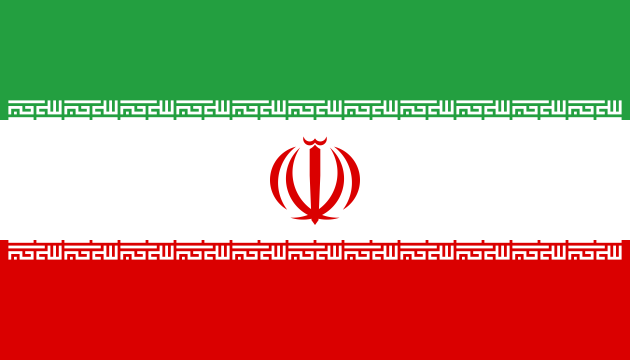
Persian, also known as Farsi, is a fascinating language that is spoken by over 100 million people worldwide. It is the official language of Iran, Tajikistan, and Afghanistan.
One of the most interesting things about Persian is its rich history and cultural significance. The language has been shaped by many influences over time, including Arabic, Turkish, and Mongolian languages. Additionally, it has a significant impact on Persian culture, with many traditional songs, poetry, and literature written in Persian.
Today, Persian is an important language for business, science, and technology in Iran and around the world. Additionally, it is an essential tool for those interested in exploring Persian culture and engaging in international business and diplomacy.
Despite its significance in Iran, Persian has many different dialects and variations, with each region having its own unique version of the language. Some of the most widely spoken dialects include Western Persian, Eastern Persian, and Central Persian.
Learning Persian can be a challenging but rewarding experience. Persian grammar rules can be complex, and mastering pronunciation can be difficult. However, with practice and dedication, anyone can become fluent in the language and enjoy all the benefits it has to offer.
Lastly, Persian has become an essential tool for those interested in exploring Persian culture and engaging in international business and diplomacy. Mastery of the language can open up many opportunities for personal and professional growth, allowing individuals to connect with people from all over Iran and gain a deeper understanding of diverse cultures.
In conclusion, Persian is a fascinating and useful language that deserves to be studied and appreciated. Its rich history, cultural significance, and global importance make it an endlessly interesting language to learn and master. Learning Persian is a valuable skill that can open up many opportunities for personal and professional growth, as well as provide a gateway to understanding the diverse cultural traditions of Iran and other Persian-speaking regions.
| I have a bad news. | یه خبر بد دارم |
| Tom rolled in the mud. | تام در گل غلتید. |
| We were not afraid. | ما نمی ترسیدیم. |
| Tom wants to meet you. | تام می خواهد با شما ملاقات کند. |
| Tom chuckled to himself. | تام با خودش خندید. |
| As it is acquired, so it is lived. | همانطور که اکتسابی است، زندگی می شود. |
| We are learning French together. | ما با هم در حال یادگیری زبان فرانسه هستیم. |
| Smoking will do you a lot of harm. | سیگار آسیب زیادی به شما وارد می کند. |
| Find Tom before he kills someone. | تام را قبل از اینکه کسی را بکشد پیدا کنید. |
| The two companies plan to merge. | این دو شرکت قصد دارند ادغام شوند. |
| Can you get a taxi here? | اینجا میتونی تاکسی بگیری؟ |
| Any child can do this. | هر کودکی می تواند این کار را انجام دهد. |
| By the way, are you free tonight? | در ضمن امشب آزاد هستی؟ |
| When were you in New York? | چه زمانی در نیویورک بودید؟ |
| The thief was caught red-handed. | دزد با دستگير شد. |
| He lives in a big house. | او در یک خانه بزرگ زندگی می کند. |
| He followed in her footsteps. | راه او را دنبال کرد. |
| Japan is famous for Mount Fuji. | ژاپن به خاطر کوه فوجی معروف است. |
| I met him the other day. | من او را روز دیگر ملاقات کردم. |
| He worked carelessly. | بی خیال کار می کرد. |
| My fate is in your hands. | سرنوشت من در دستان توست |
| He has great abilities. | او توانایی های فوق العاده ای دارد. |
| He kept aloof. | او دوری کرد. |
| Tom loves cockfights. | تام عاشق جنگ خروسهاست. |
| Judy loves to dance. | جودی عاشق رقصیدن است. |
| Karol is learning Spanish. | کارول در حال یادگیری زبان اسپانیایی است. |
| Lincoln was a Republican. | لینکلن یک جمهوری خواه بود. |
| Nothing comes from nothing. | هیچ چیز از هیچ حاصل نمی شود. |
| Do you love your father? | پدرت را دوست داری؟ |
| What would you like to do today? | دوست داری امروز چکار کنی؟ |